The DEA and HHS extended telemedicine prescribing flexibilities through December 31, 2026 — and buried inside that extension is a compliance reality most digital health platforms haven’t fully processed. Every telehealth provider and online pharmacy prescribing or dispensing controlled substances must verify patient identity and age before the first interaction. Not after. Not during a “grace period.” Before.
If you operate a telehealth platform, digital pharmacy, or virtual care application that touches Schedule II–V substances, this is your compliance guide for 2026.
Why Telehealth Age and Identity Verification Matters Now
The Regulatory Trigger
The COVID-era telemedicine flexibilities that allowed providers to prescribe controlled substances without an in-person visit were always temporary. The DEA has now issued a fourth extension — effective January 1, 2026, through December 31, 2026 — keeping these flexibilities alive, but with an explicit expectation: platforms must implement “reasonable measures” to verify patient identity before initiating treatment.
Here’s what that means in practice:
- Schedule II–V controlled medications (stimulants, benzodiazepines, opioids, sleep medications) can be prescribed via audio-video telemedicine encounters
- Schedule III–V medications for opioid use disorder (buprenorphine) can be prescribed via audio-only encounters
- All prescriptions must still be issued for a “legitimate medical purpose” — and regulators are increasingly interpreting that to include verification that the patient is who they claim to be
The extension is not permanent. When it expires, the DEA’s proposed permanent telehealth rules are expected to require even stricter identity verification, potentially including state-issued ID checks before the first controlled substance prescription.
The Enforcement Gap Is Closing
In 2025 and early 2026, enforcement actions against telehealth platforms accelerated:
- The DOJ shut down multiple telehealth pill mills that prescribed controlled substances without meaningful identity checks
- State medical boards began revoking licenses of providers who prescribed through platforms lacking KYC infrastructure
- The FDA issued warning letters to online pharmacies dispensing age-restricted medications (including testosterone and weight-loss drugs) without verifying patient age or identity
- Several states passed legislation requiring telehealth platforms to implement “identity assurance” as a condition of licensure
The pattern is clear: regulators no longer treat telehealth as a lower-compliance channel. The same identity verification standards expected of in-person care are now being applied to virtual encounters.
What Digital Health Platforms Must Verify
Age Verification
Age verification in telehealth is not optional — it’s a clinical, legal, and regulatory requirement across multiple dimensions:
Controlled substance prescribing. Most controlled substances have age-specific prescribing guidelines. Stimulant medications for ADHD, for example, require different protocols for patients under 18 versus adults. Benzodiazepines and opioids carry additional restrictions for minors. Platforms must verify patient age before the prescribing encounter to ensure appropriate clinical decision-making.
State telemedicine laws. At least 14 states now require telehealth platforms to verify that patients meet minimum age requirements for specific services — ranging from mental health prescriptions to hormone therapy. Some states mandate parental consent verification for patients under 18, which requires age confirmation as a prerequisite.
Pharmacy dispensing. Online pharmacies shipping age-restricted products (testosterone, GLP-1 agonists, controlled substances) must confirm the recipient meets age requirements. The FTC has signaled that shipping age-restricted medications without age verification constitutes an unfair or deceptive practice.
Identity Verification
Beyond age, telehealth platforms need to confirm that patients are who they say they are:
PDMP compliance. Prescription Drug Monitoring Programs (PDMPs) require accurate patient identification to prevent doctor-shopping and diversion. If your platform can’t tie a prescription to a verified identity, your providers are exposed to PDMP reporting failures and potential DEA scrutiny.
Insurance fraud prevention. Identity verification prevents one person from using another’s insurance credentials for telehealth visits — a growing fraud vector as virtual care volume increases.
State licensure requirements. Providers must confirm the patient’s physical location during a telehealth encounter to ensure they’re practicing within their licensed jurisdictions. While geolocation handles the location piece, identity verification ensures the person on the video call is actually the named patient.
The Compliance Challenge: Balancing Security with Patient Access
Here’s the tension every digital health platform faces: aggressive identity verification can create friction that drives patients away from care they need, while weak verification exposes the platform to regulatory action, clinical liability, and fraud.
The traditional approaches fail in different ways:
Self-declaration (“I confirm I am over 18”) provides zero assurance and is explicitly rejected by the DEA’s proposed rules for controlled substance prescribing.
Knowledge-based authentication (KBA) — asking patients security questions based on credit bureau data — has a well-documented failure rate above 20% and is increasingly compromised by data breaches. It also excludes patients with thin credit files, disproportionately affecting younger adults, immigrants, and underserved populations.
Manual ID upload (photographing a driver’s license) creates HIPAA-adjacent data handling obligations, introduces hours of lag into the patient onboarding process, and is vulnerable to document fraud. For time-sensitive care — mental health crises, pain management, substance use treatment — this delay is clinically unacceptable.
In-person verification defeats the purpose of telehealth entirely and is particularly harmful for patients in rural areas, those with mobility limitations, or individuals seeking stigmatized care (addiction treatment, psychiatric services).
The Architecture That Actually Works
The solution isn’t to choose between security and access — it’s to implement verification methods that deliver both simultaneously.
AI-Powered Age Estimation with Liveness Detection
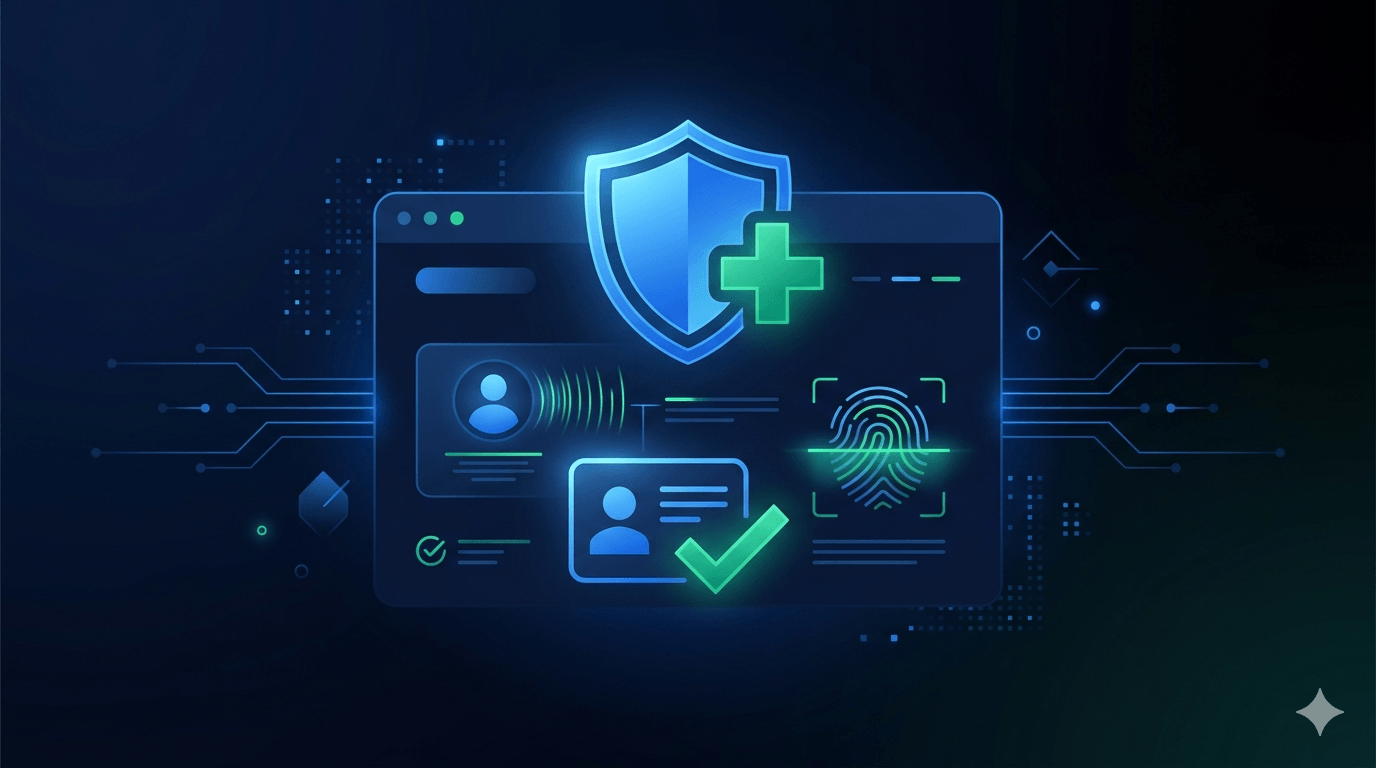
Modern age estimation uses on-device neural networks to confirm a patient meets minimum age thresholds from a brief video selfie, without storing biometric data or requiring a government ID. The key architectural requirements:
- On-device processing. The age estimation model runs on the patient’s device, so raw biometric data never leaves the phone or computer. This is critical for HIPAA compliance — you can’t breach what you never collected.
- Liveness detection. Server-side or client-side liveness detection confirms that the video feed comes from a live person, not a photo, deepfake, or replay attack. This is non-negotiable for DEA compliance.
- Threshold-based results. The system returns “meets age threshold” or “does not meet age threshold” — never an exact age or biometric template. This minimizes data collection while providing the verification signal the platform needs.
Document Verification for Controlled Substance Workflows
For higher-assurance scenarios (first controlled substance prescription, Schedule II medications), platforms can layer document verification:
- OCR extraction from a government-issued ID to confirm name, date of birth, and document validity
- Face match between the ID photograph and a live selfie to prevent identity fraud
- Document authenticity checks to detect tampered, expired, or synthetic documents
The critical architectural decision: process the document check once at onboarding, then issue a reusable verification token for subsequent visits. This avoids forcing patients to re-verify for every appointment while maintaining an auditable verification chain.
Returning Patient Tokens
After initial verification, platforms should issue cryptographic tokens that confirm “this patient has been identity-verified” without requiring re-verification at every touchpoint. This is where telehealth compliance and user experience converge:
- First visit: full identity and age verification (30–60 seconds)
- Subsequent visits: token-based authentication (instant)
- Re-verification triggers: new controlled substance class, provider change, suspicious activity, or regulatory audit
This pattern mirrors the “verify once, prove everywhere” model that’s becoming standard across regulated industries.
State-by-State Compliance Considerations
The US telehealth landscape is, characteristically, fragmented. Key variations to account for:
California (CMIA + state telehealth law). Requires “reasonable verification” of patient identity before telehealth encounters. The California Medical Board has interpreted this to include ID verification for controlled substance prescribing. Additionally, the California Consumer Privacy Act (CCPA) applies to biometric data collected during verification.
New York (Digital Health Law). Requires telehealth platforms to maintain records demonstrating patient identity verification. The state recently proposed amendments that would mandate biometric verification for controlled substance prescribing via telehealth.
Texas (SB 1107). Texas requires telehealth providers to verify patient identity using “government-issued identification or equivalent means” before prescribing controlled substances. This is one of the most explicit state-level mandates.
Florida (Telehealth Registration Act). Florida requires telehealth providers to register with the state and implement identity verification protocols as a condition of registration. The state has begun auditing telehealth platforms for compliance.
Multi-state operators must implement verification workflows that satisfy the strictest applicable standard while maintaining a consistent patient experience across jurisdictions.
HIPAA Considerations for Verification Data
Any identity or age verification system deployed in a healthcare context must account for HIPAA’s data handling requirements:
Minimum necessary standard. Only collect the verification data you need. Age estimation that returns a binary threshold result (over/under 18) is preferable to collecting and storing a full date of birth. Face match that returns “match/no-match” is preferable to storing biometric templates.
Business Associate Agreements. If your verification provider processes protected health information (PHI), they must execute a BAA. This includes any provider that receives patient photos, IDs, or biometric data as part of the verification process.
Data retention. Store verification results (pass/fail, timestamp, method used), not verification inputs (photos, ID images, biometric data). This satisfies audit requirements while minimizing your attack surface.
Breach notification. If your verification system is compromised and it contains PHI, you’re subject to HIPAA breach notification rules — including notification to HHS and affected individuals within 60 days.
The simplest path to HIPAA compliance in verification: use a provider that processes data on-device and never receives raw biometric data or ID images on their servers.
Integration Patterns for Telehealth Platforms
Pre-Visit Verification Flow
The most common and recommended pattern:
- Patient downloads the app or visits the platform website
- Account creation triggers age and identity verification
- Verification completes (30–60 seconds for age estimation, 60–90 seconds for full ID check)
- Verification token is issued and stored with the patient record
- Provider sees “identity verified” badge in their EHR/telehealth dashboard
- Subsequent visits authenticate via token — no re-verification needed
API Integration
Modern verification providers offer REST APIs that slot into existing telehealth workflows:
POST /api/v1/verify
{
  "session_id": "patient-session-123",
  "checks": ["age_threshold", "liveness"],
  "age_threshold": 18,
  "redirect_url": "https://yourplatform.com/onboarding/complete"
}
The API returns a verification result and a reusable token. The telehealth platform stores the token reference — never the raw verification data.
EHR/EMR Integration
For platforms using Epic, Cerner, or other EHR systems, verification results can be written to the patient chart as a structured data element, providing an auditable record that satisfies both clinical documentation and regulatory requirements.
What Happens When You Don’t Verify
The consequences of operating a telehealth platform without adequate age and identity verification are escalating:
- DEA action. The DEA can revoke a provider’s registration for prescribing controlled substances without adequate patient verification. This effectively shuts down the provider’s ability to prescribe.
- State enforcement. State medical boards are suspending licenses of providers who prescribe through non-compliant platforms.
- DOJ prosecution. The Department of Justice has prosecuted telehealth operators for healthcare fraud where inadequate identity verification enabled pill mill operations.
- Civil liability. Platforms that prescribed age-restricted medications to minors without verification face tort liability for resulting harm.
- Insurance exclusion. Payers are beginning to require identity verification as a condition of telehealth reimbursement.
How Xident Fits
Xident’s verification infrastructure was designed for exactly this use case — high-assurance identity and age verification that doesn’t sacrifice patient access:
- On-device age estimation that satisfies HIPAA’s minimum necessary standard by never transmitting raw biometric data
- Server-side liveness detection that meets DEA expectations for anti-fraud controls
- Document OCR and face match for controlled substance workflows requiring full identity verification
- Reusable verification tokens that eliminate re-verification friction for returning patients
- Sub-60-second verification that doesn’t create clinical access barriers
- HIPAA-compatible architecture with BAA support and on-device processing
If your telehealth platform or digital pharmacy needs to implement identity and age verification that satisfies the DEA’s 2026 requirements without destroying your patient funnel, start a free trial or talk to our team.
The Bottom Line
The DEA’s 2026 telehealth extension is a reprieve, not a pass. Digital health platforms that implement robust identity and age verification now will be positioned when the permanent rules arrive — and will avoid the enforcement actions that are already targeting non-compliant operators.
The platforms that treated verification as a “nice to have” are the ones getting shut down. The platforms that built verification into their clinical workflow from day one are the ones scaling.
Verification in healthcare isn’t just compliance. It’s the foundation of the trust that makes virtual care work.