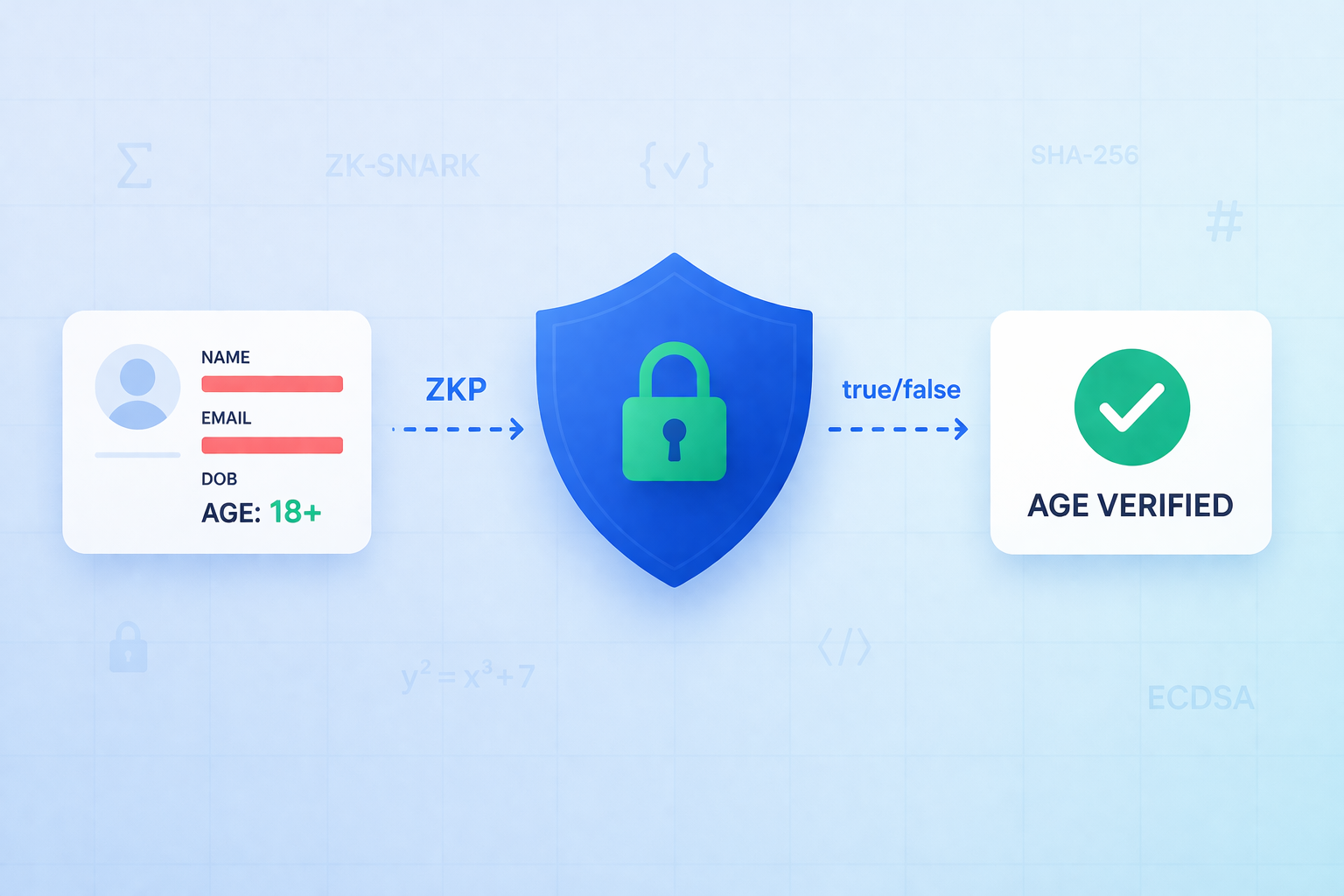
When Google announced in May 2025 that it was integrating zero-knowledge proofs into Google Wallet for age verification — with Bumble as a launch partner — the signal was unmistakable. The world’s largest digital wallet provider had decided that the future of age assurance is cryptographic, not documentary. Users would prove they met an age threshold without transmitting their name, date of birth, or government ID to the requesting platform. The only information revealed: a boolean. Yes or no.
For platform operators navigating the growing patchwork of age verification mandates across the US, EU, UK, and Australia, this shift matters enormously. Zero-knowledge proofs represent a potential escape from the impossible trade-off that has defined the age verification debate for years: verify users rigorously, or protect their privacy. ZKPs promise both. But the technology comes with real limitations that every product and compliance team should understand before committing to an implementation strategy.
What Zero-Knowledge Proofs Actually Are
A zero-knowledge proof (ZKP) is a cryptographic protocol that allows one party — the prover — to convince another party — the verifier — that a statement is true, without revealing any information beyond the truth of the statement itself.
In the context of age verification, the statement is simple: “This user is 18 or older.” A ZKP-based system allows the user to prove this fact to a platform without disclosing their exact date of birth, their name, their government ID number, or any other identifying information. The platform receives a cryptographically verified assertion that the age threshold is met. Nothing more.
This is fundamentally different from traditional identity verification, where the platform — or its verification vendor — receives a copy of the user’s government ID, processes a facial image, and stores or transmits personal data to reach the same conclusion. The ZKP approach eliminates the data transfer entirely. The proof itself is the verification.
The Architecture: How ZKP-Based Age Verification Works in Practice
A practical ZKP age verification flow involves three participants: the credential issuer, the user’s device, and the relying party (the platform requesting verification).
Step 1: Credential Issuance. The user obtains a digital credential from a trusted issuer — typically a government authority, a digital identity wallet provider like Google Wallet, or a certified age verification service. This credential contains the user’s date of birth, cryptographically signed by the issuer.
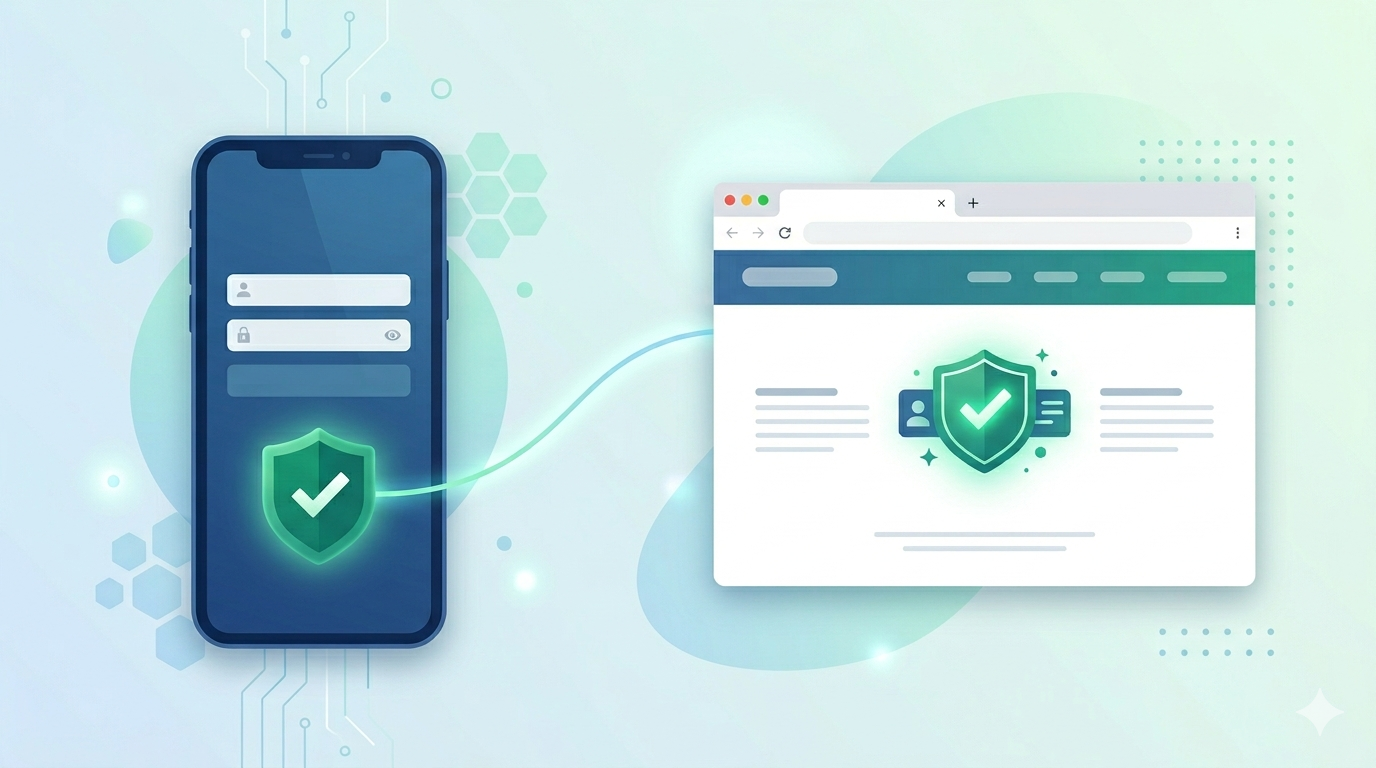
Step 2: Proof Generation. When a platform requests age verification, the user’s device generates a zero-knowledge proof from the stored credential. The proof demonstrates that the date of birth in the credential satisfies the platform’s age threshold (e.g., 18+, 21+, 25+) without revealing the date of birth itself. This computation happens entirely on the user’s device.
Step 3: Proof Verification. The platform receives the proof and verifies its cryptographic validity. If the proof is valid and was generated from a credential signed by a trusted issuer, the platform accepts the age assertion. No personal data changes hands.
The elegance of this architecture is that the platform never needs to handle biometric data, government ID images, or dates of birth. The compliance surface area shrinks dramatically. The data minimization principle — a cornerstone of GDPR — is satisfied by design, not by policy.
Why 2026 Is the Inflection Point
Several converging forces are pushing ZKP-based age verification from academic curiosity to production reality in 2026.
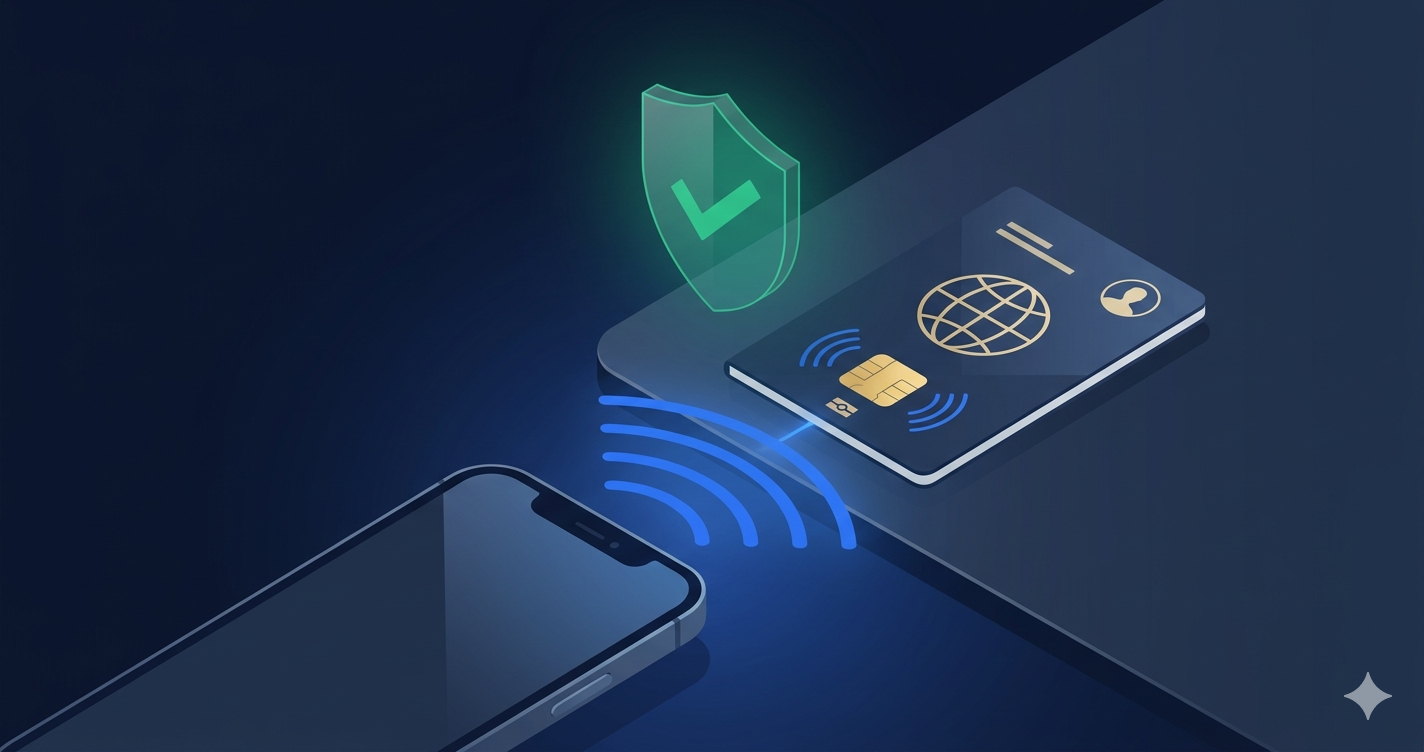
Google Wallet integration. Google’s decision to build ZKP age verification directly into Google Wallet — with government-issued IDs in over a dozen US states, plus the UK — provides the credential infrastructure that ZKP systems require. Bumble’s integration as a launch partner demonstrated that the flow works in consumer-scale applications. With Google Wallet projected to reach 143 million users, the credential issuance problem — historically the biggest barrier to ZKP adoption — is being solved by platform economics rather than government mandates.
EU eIDAS 2.0 enforcement. The European Union’s revised eIDAS Regulation mandates that all Member States offer at least one EU Digital Identity Wallet by the end of 2026. The regulation explicitly encourages privacy-enhancing technologies, including zero-knowledge proofs, as part of the wallet’s credential presentation layer. This creates a regulatory tailwind for ZKP adoption across 27 countries and roughly 450 million citizens.
Regulatory pressure on data minimization. The UK Information Commissioner’s Office fined Reddit £14.5 million in early 2026 for relying on self-declaration age gates and failing to adequately protect children’s data. Regulators across jurisdictions are making it clear that passive age gates are no longer acceptable — but they’re also signaling that over-collection of personal data for age verification purposes creates its own compliance risks. ZKPs thread this needle.
Device-level age signals. Both Apple and Google are developing device-level age verification signals that can be consumed by apps without direct access to personal data. These signals — combined with ZKP presentation of wallet-stored credentials — create a layered verification architecture where the platform never touches biometric or identity data.
The Limitations You Need to Understand
Zero-knowledge proofs are not a silver bullet. The Electronic Frontier Foundation, Brave, and Columbia University researchers have all published analyses highlighting real constraints that platform operators should weigh carefully.
The credential issuance dependency. ZKP age verification only works if users have a valid digital credential to generate proofs from. Today, that means a government-issued ID stored in Google Wallet, Apple Wallet, or an EU Digital Identity Wallet. Users without smartphones, without digital wallets, or in jurisdictions where digital ID issuance hasn’t rolled out are excluded. This creates an equity and accessibility gap that regulators — particularly in the EU — are watching closely.
Linkability risks. While a single ZKP reveals nothing beyond the age assertion, repeated presentations of proofs can create correlation opportunities. If a user presents proofs to multiple platforms, and those platforms share metadata (timing, IP address, device fingerprint), the proofs can potentially be linked back to an individual. The cryptographic privacy of the proof doesn’t protect against contextual re-identification. Implementation details matter enormously here.
Issuer trust concentration. ZKP systems shift trust from individual platforms to credential issuers. If Google Wallet is the dominant issuer, Google becomes the de facto gatekeeper of age verification across the internet — a concentration of power that raises its own concerns. The EU’s multi-wallet mandate partially addresses this, but in practice, credential issuance is likely to consolidate around a small number of providers.
Revocation complexity. If a credential needs to be revoked — for example, because the underlying government ID was stolen or the user’s age data has changed — the revocation mechanism must work without breaking the zero-knowledge property. This is a solved problem in cryptographic theory but adds implementation complexity that many teams underestimate.
How This Connects to On-Device Verification
ZKP-based age verification and on-device ML age estimation are complementary technologies, not competitors. They address different verification scenarios:
ZKP credential verification is ideal when the user has a trusted digital credential and the platform needs high-assurance age verification — financial services, age-restricted e-commerce, dating platforms, and regulated content access. The verification is deterministic: the credential either proves the age threshold or it doesn’t.
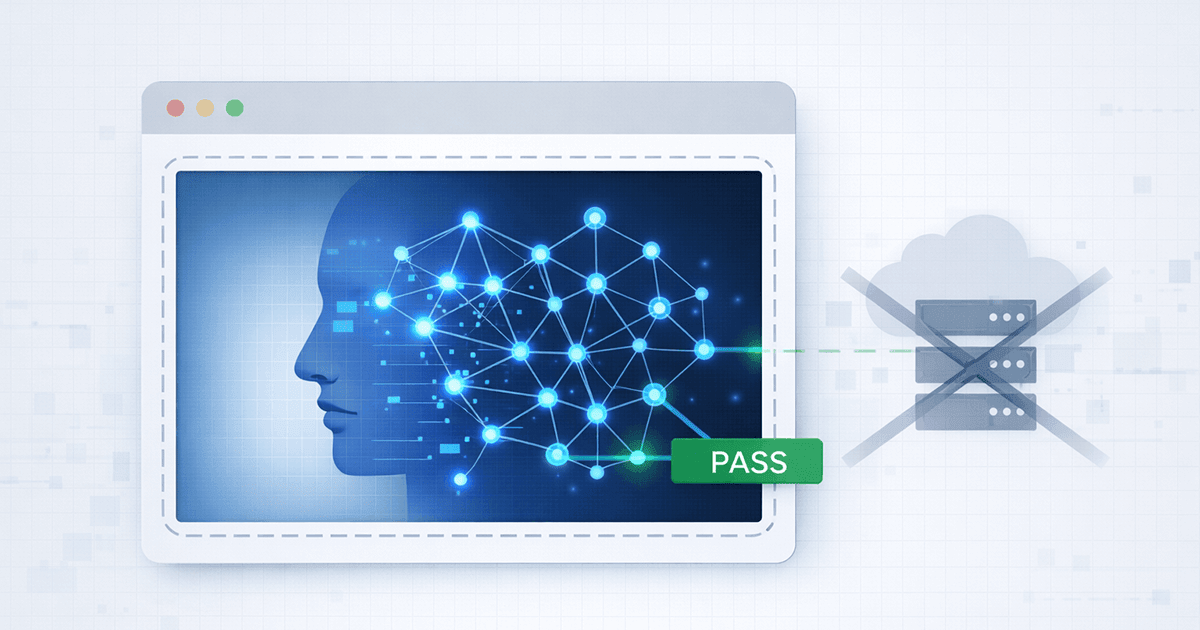
On-device ML age estimation is ideal for lightweight, friction-free verification scenarios where probabilistic age classification is acceptable — social media platforms, content recommendation engines, and low-risk age gates. No credential is required; the system estimates age from a facial image processed entirely on the user’s device.
A production-grade age verification platform should support both approaches, selecting the appropriate method based on the regulatory context, risk tolerance, and user experience requirements of each verification scenario. At Xident, our architecture is designed to integrate both on-device ML inference and cryptographic credential verification into a single SDK — giving platforms the flexibility to choose the right tool for each use case without managing multiple vendor relationships.
What Platform Operators Should Do Now
If you’re building or operating a platform that requires age verification, here’s a practical roadmap for incorporating ZKP-based verification:
Audit your current data flows. Map exactly what personal data your age verification process collects, transmits, and stores. If government ID images or facial biometrics are being sent to third-party servers, you have a data minimization problem that ZKPs can solve.
Evaluate credential availability for your user base. Check which percentage of your users are in jurisdictions with digital ID wallet support — US states with Google Wallet ID support, EU countries rolling out eIDAS wallets, UK digital ID programs. This tells you how much of your user base can realistically use ZKP-based verification today.
Implement a layered strategy. Don’t wait for universal credential availability. Deploy ZKP verification as the primary path for users with digital credentials, and fall back to on-device ML age estimation for users without credentials. This maximizes privacy for all users while maintaining regulatory compliance.
Watch the standards. IEEE 2089.1 (Age Estimation Performance Benchmarking), ISO/IEC 27566 (Age Assurance Systems), and the EU’s eIDAS implementing acts are all establishing technical standards for age verification. Building to these standards now avoids rework when they become mandatory requirements.
Choose vendors that support both approaches. The worst outcome is locking into a vendor that only supports one verification method. The regulatory landscape is moving toward layered, risk-based approaches that require flexibility. Your age verification infrastructure should be capable of ZKP credential verification, on-device ML estimation, and traditional document verification — selectable per-market and per-use-case.
The Bottom Line
Zero-knowledge proofs are moving from cryptographic theory to production infrastructure for age verification. Google Wallet’s integration, the EU’s eIDAS mandate, and increasing regulatory hostility toward over-collection of personal data are creating a perfect storm of adoption drivers.
But ZKPs are not a replacement for comprehensive age verification — they’re a critical addition to the toolkit. The platforms that will navigate 2026’s regulatory landscape most effectively are those that can deploy ZKP-based verification where credentials are available, on-device ML estimation where they’re not, and traditional document verification where regulators demand it.
Xident’s platform is built for exactly this kind of flexibility. Our SDK supports on-device ML age estimation, token-based returning user verification, and cryptographic credential validation — letting platforms choose the right verification method for each user, each market, and each regulatory requirement.
The era of “upload your ID to our server” is ending. The question isn’t whether zero-knowledge age verification will become mainstream. It’s whether your platform will be ready when it does.