If you are choosing an age assurance vendor in 2026, you will be shown a NIST number. Every serious provider now submits algorithms to the National Institute of Standards and Technology’s Face Analysis Technology Evaluation for Age Estimation and Verification (FATE AEV), and every press release that follows leads with a ranking: first in mean absolute error, lowest false positive rate, top of the composite.
Regulators are paying attention too. The UK’s Ofcom, Australia’s eSafety Commissioner, and several US state attorneys general now reference independent accuracy testing when assessing whether a platform’s age checks are “highly effective” or constitute “reasonable steps.” NIST FATE has become the closest thing the industry has to a shared yardstick.
The problem is that the yardstick is routinely misread. A vendor can be number one on one FATE metric and mediocre on the one that actually determines whether a 16-year-old gets into your platform. This post explains what the 2026 numbers say, what they don’t, and how to convert a benchmark table into decisions about buffers, escalation rates, and conversion.
What NIST FATE AEV Actually Measures
NIST’s evaluation is ongoing — vendors submit algorithms continuously, and NIST updates published results several times a year. The May 15, 2026 report covers more than twenty vendors and measures several distinct things:
Mean Absolute Error (MAE). The headline metric: on average, how many years off is the estimate? NIST summarizes it across two sexes and thirteen age ranges spanning 18 to 30, and breaks it out by region of origin, sex, and image type. Top performers in the 2026 reports sit in the 2.5 to 3.5 year range on well-lit, frontal images — a substantial improvement over the first results NIST published in 2024.
Challenge 25 false positive rate. This models the policy many regulated industries already use at physical points of sale: if someone looks under 25, check ID. The metric that matters is the false positive rate — how often the algorithm classifies an actual minor as over the threshold. In the May 2026 update, the best-performing algorithm posted an FPR of 0.017, meaning roughly 1.7% of minors slipped past the 25-threshold screen. That is the number that maps to “did a child get into your platform,” and it is not the same vendors leading MAE.
The Child Online Safety track (ages 13–16). Added as regulators began mandating thresholds at 13, 15, 16, and 18 rather than 21+, this track measures accuracy specifically on adolescent faces — the hardest problem in the field, because faces change fastest at exactly the ages the law cares about.
Demographic differentials. NIST publishes error rates broken out by sex and region of birth. The 2026 updates show real progress here: several vendors now hold MAE below 3.5 years for East and West African subjects, where early evaluations showed the largest gaps. But differentials have not disappeared, and the spread between a vendor’s best and worst demographic cell is often larger than the gap between vendors.
Image quality sensitivity. The latest reports add MAE by interocular distance — the pixel distance between pupils — as a proxy for image resolution. Accuracy degrades measurably on low-resolution captures, which is exactly what you get from a budget Android front camera in poor lighting. A vendor’s mugshot-quality MAE is the ceiling, not the expectation.
Why MAE Alone Will Mislead You
MAE answers the question “how close is the estimate, on average?” Your compliance obligation answers a different question: “how often does the system put someone on the wrong side of a legal threshold?”
These diverge for a simple reason: errors near the threshold are the only ones that matter. An algorithm that estimates a 40-year-old as 35 contributes five years to MAE and zero compliance risk. An algorithm that estimates a 17-year-old as 19 contributes two years to MAE and is precisely the failure your regulator will fine you for. Two vendors with identical MAE can have wildly different error distributions around age 18.
This is why threshold classification — not point estimation — is the correct framing for age assurance. The operational question is never “how old is this user?” It is “is this user over 16, over 18, over 21?” Once you frame it that way, the metrics that matter are the false positive rate (minors classified as adults — your compliance exposure) and the false negative rate (adults classified as minors — your conversion loss). MAE is an input to those rates, not a substitute for them.
Buffer Math: The Decision That Actually Matters
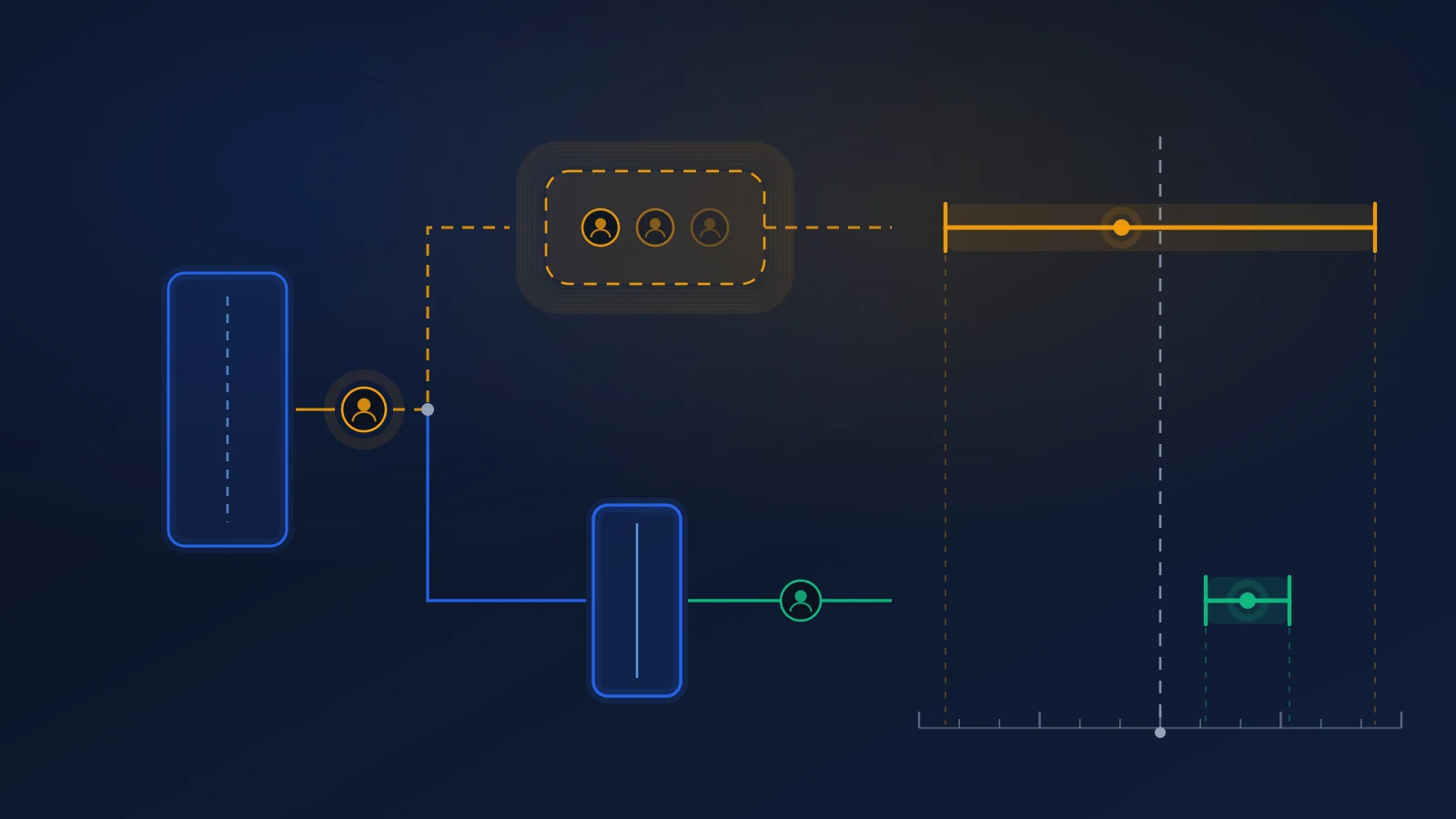
Every production deployment of facial age estimation runs a buffer: instead of testing against the legal age L, you test against L plus a margin. Challenge 25 is exactly this — a 7-year buffer over a legal age of 18.
The buffer is where engineering meets economics, and it is a decision you should make deliberately rather than inherit from a vendor default:
Wider buffer, lower compliance risk, higher friction. With a buffer at 25 and an MAE around 3 years, almost no 16-year-old clears the gate on estimation alone. But a meaningful share of legitimate 19-to-24-year-olds now falls into the uncertain band and gets escalated to a document check — and document checks are where users abandon flows. If your audience skews young, an aggressive buffer can push double-digit percentages of real adults into escalation.
Narrower buffer, better conversion, more minors through. Shrink the buffer to 21 and most young adults clear instantly — but the 1.7% minor pass-through rate at threshold 25 climbs substantially. Whether that is acceptable depends on what you are gating: a 15-rated game trailer is not an online casino.
The right way to set the buffer is to work backward from two numbers: the regulatory tolerance for minor pass-through in your category, and the measured abandonment rate of your escalation path. Vendors quote the first column of that trade-off; your finance team feels the second.
How to Read a Vendor’s NIST Claim
When a provider tells you they are “ranked first in NIST FATE,” apply four filters:
Which metric, which track? First in mugshot MAE is not first in Challenge 25 FPR, and neither is first on the 13–16 child safety track. Match the claim to your threshold. If your legal exposure is at 16, the adolescent track is the only one that predicts your risk.
Which demographic cells? Ask for the breakout by sex and region, and compare worst-cell performance, not the composite. Your user base is not the NIST average, and over-blocking one demographic is both a discrimination problem and, under regimes like Australia’s, a compliance failure in its own right.
Which image quality? Benchmark images are not production selfies. Ask how accuracy holds up at low interocular distance and what the capture flow does to recover quality — guidance overlays, retake prompts, liveness checks that double as quality gates.
Which algorithm version? NIST evaluates specific submitted builds. Confirm the algorithm in the report is the one in the SDK you will actually deploy, not a research build tuned for the benchmark.
A vendor who answers these four questions directly is showing you an engineering culture. One who repeats the press release is showing you a marketing department.
What the 2026 Numbers Mean in Practice
Step back from individual rankings and the May 2026 picture is clear: facial age estimation has crossed the line from “interesting” to “deployable as a first gate.” Errors of 2.5 to 3.5 years, single-digit-percentage minor pass-through at Challenge 25 buffers, and narrowing demographic gaps make estimation good enough to clear the bulk of obviously-adult users without collecting a single document.
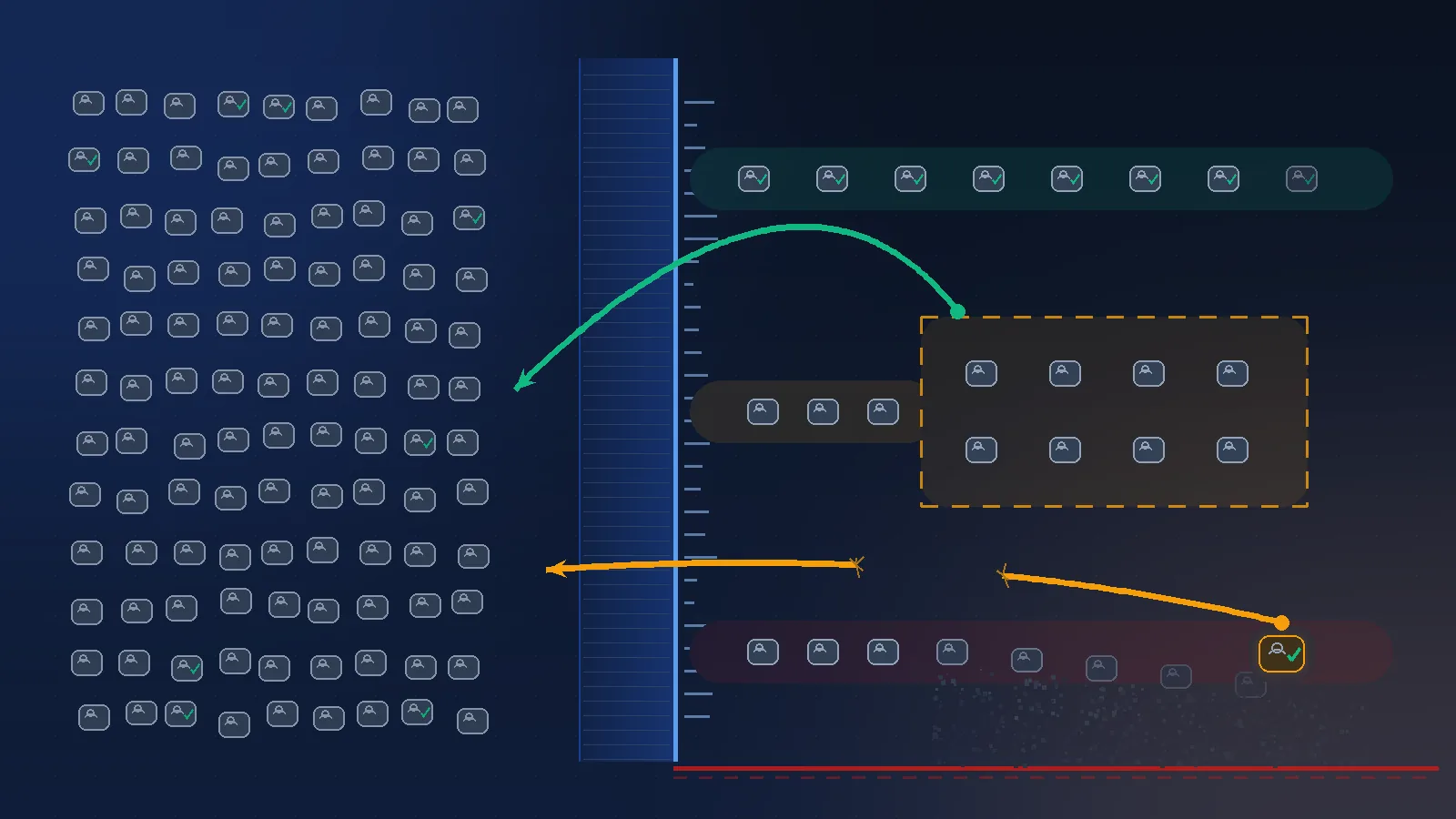
What it has not become — and likely never will be — is sufficient on its own at the threshold. A system with a 3-year MAE cannot reliably separate a 15-year-old from a 17-year-old, which is exactly the distinction laws in Australia, France, and a growing list of US states require. Estimation is a router, not a verdict: it resolves the easy majority instantly and routes the uncertain band to higher-assurance methods.
That layered architecture is what regulators are converging on anyway. Australia’s eSafety guidance explicitly endorses successive validation. Ofcom’s “highly effective” standard contemplates combined methods. The EU’s age verification blueprint assumes escalation paths. The benchmark numbers and the regulatory architecture point at the same design.
How Xident Uses These Numbers
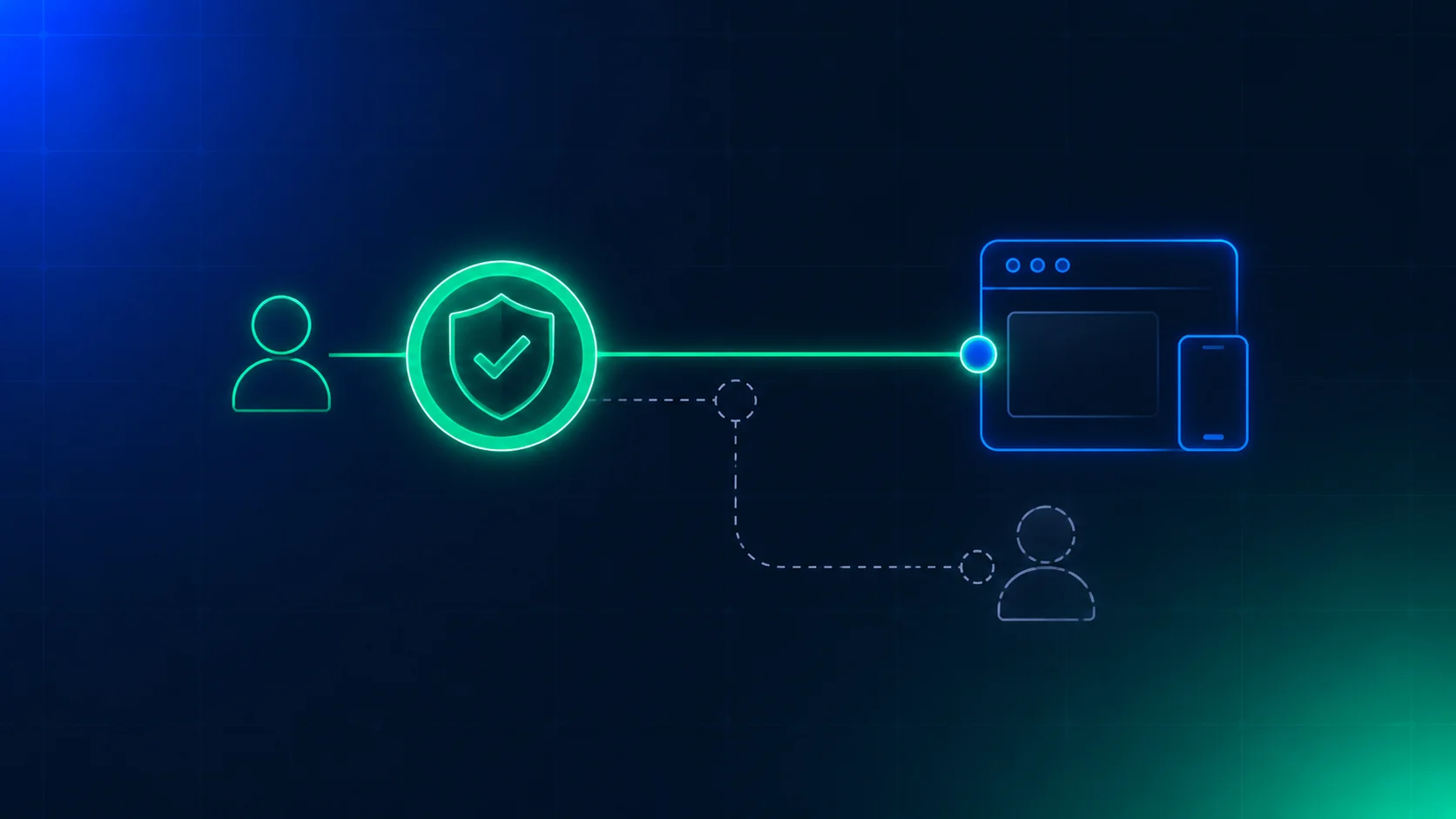
Xident’s pipeline is built around threshold classification rather than point estimation. The first gate is client-side facial age estimation that returns a classification against your configured threshold — over/under 12, 15, 16, 18, 21, or 25 — with a buffer you control, not one we hard-code. Users who clear the buffer pass with zero documents collected; users in the uncertain band escalate automatically to document OCR and face match.
Because the buffer is configurable per flow, you can run the math this post describes: tighten the buffer for high-risk surfaces like gambling or adult content, relax it for age-tiered experiences where the cost of an error is lower. Every decision is logged as a classification with the method that produced it, giving you the documented trail that an Ofcom or eSafety inquiry asks for — without storing a single date of birth or ID image beyond the check itself.
And because verified users receive a reusable Xident token, the accuracy question only has to be answered once. A returning user proves their age band cryptographically instead of re-running estimation, which means your effective accuracy compounds: the system gets both faster and more certain as your verified population grows.
Facial age estimation in 2026 is accurate enough to carry most of the load and nowhere near accurate enough to carry all of it. The vendors’ NIST numbers are real progress — but the difference between a compliant deployment and a fine is not who tops the MAE table. It is whether someone sat down and did the buffer math for your thresholds, your demographics, and your escalation flow. That is the work. The benchmark is just the starting data.