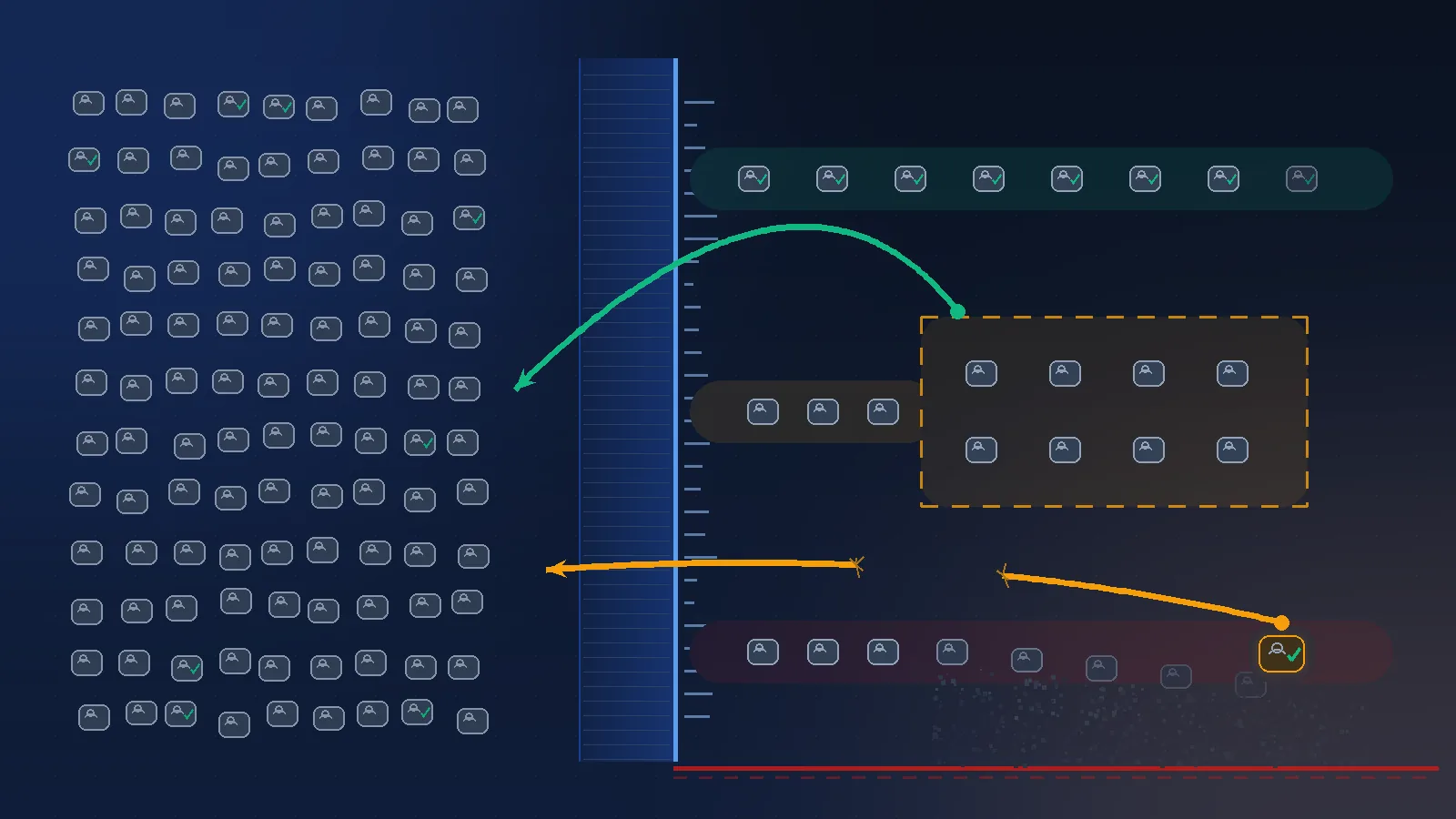
In January 2026, Roblox made facial age estimation mandatory to access chat, worldwide. Within days, a predictable failure mode showed up in the wild: frustrated parents, hitting friction on their kids’ accounts, completed the facial check themselves. The system did exactly what it was told. It estimated an adult face, returned an over-21 band, and dropped a child into the highest-trust social tier — the one designed to let adults talk to adults.
Nothing about the check malfunctioned. The camera worked, the model was accurate, the image was deleted after processing. The check verified a face. It did not verify that the face belonged to the person who would actually use the account. That gap — between “a valid check happened” and “the right person is on the other side of the session” — is the single most underbuilt part of age assurance in 2026, and it is where most real-world circumvention lives.
This post is about that gap, why the obvious fixes don’t close it, and how to think about binding a verified result to an actual user instead of treating the check as a one-time gate.
The check is an event. Your obligation is a state.
Almost every age assurance integration is modeled as an event: at some moment, a user clears a gate, a flag flips to verified: true, and the product moves on. Regulators, however, are not asking about an event. Ofcom’s “highly effective age assurance” standard, Australia’s “reasonable steps,” and the EU’s age verification blueprint all describe an ongoing property of who is using the service — not a one-time receipt that a check was performed.
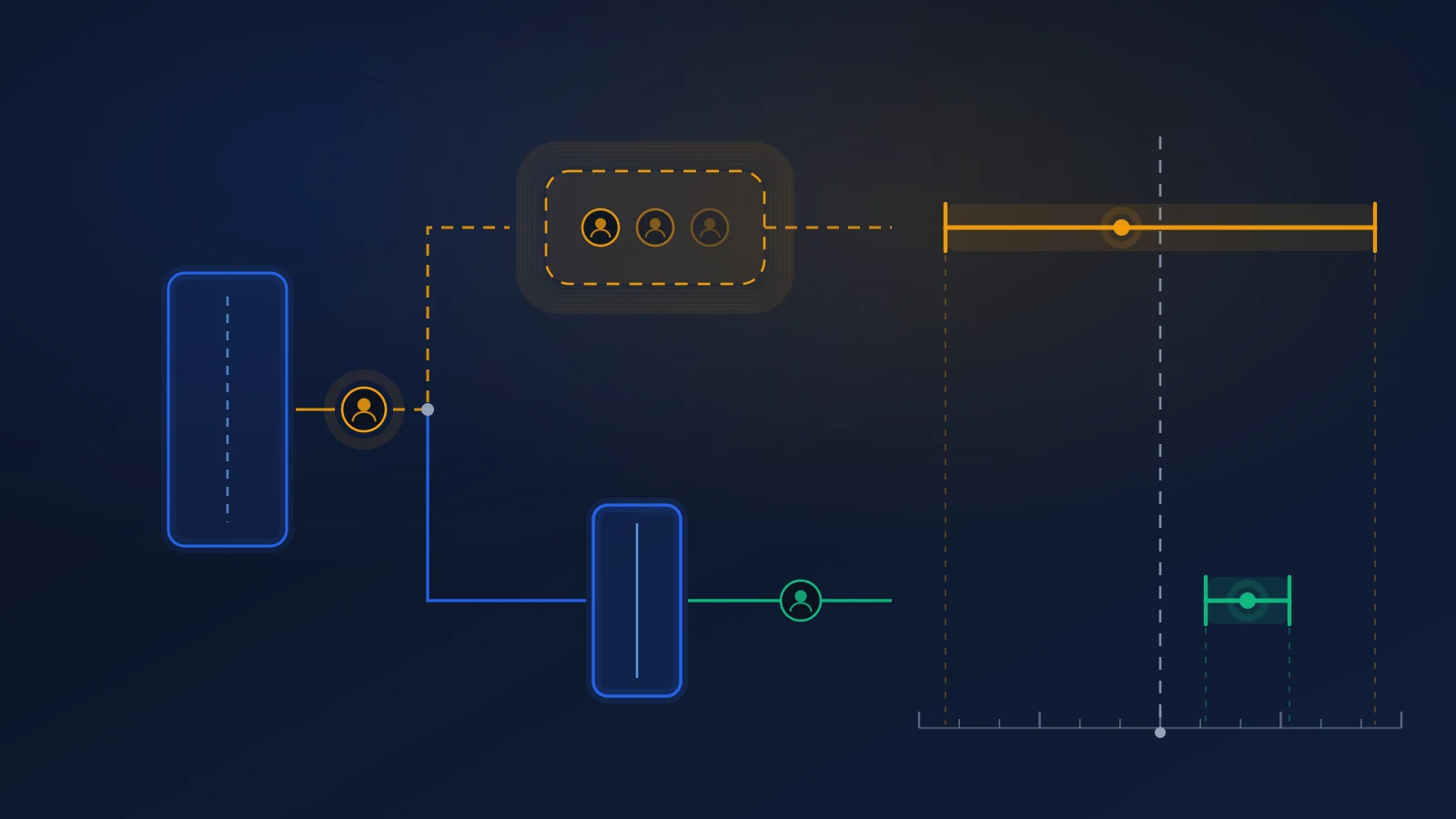
The mismatch is structural. An event-based design answers “did someone pass?” The regulatory question is “is the person using this account, right now, the age they were verified to be?” Those are different questions, and the second one is hard precisely because the conditions that held at verification time decay. Devices are shared. Sessions are handed off. Credentials get borrowed. A flag set to true in March tells you nothing about who is holding the phone in June.
Once you frame age assurance as a state to be maintained rather than an event to be logged, the circumvention vectors stop looking like edge cases and start looking like what they are: the predictable consequence of binding a result to nothing.
The four ways a valid check verifies the wrong person
Circumvention rarely involves defeating the verification technology. It involves satisfying it honestly with the wrong human, or detaching a genuine result from the account that uses it.
Proxy verification. Someone eligible passes the check on behalf of someone who isn’t. The Roblox parent is the sympathetic version; an older sibling, a paid “verification-for-hire” service, or a classmate with a convincing face are the adversarial ones. The check is real. The subject is wrong. No liveness test or NIST-topping model catches this, because there is no spoof — just the wrong cooperating person.
Shared devices and shared sessions. One verified login, many users. A family tablet, a shared console, a school Chromebook, a sold-on second-hand phone that still carries a device-level age signal. Device-bound and OS-level age verification — the model behind the Parents Decide Act and the app-store accountability laws — is especially exposed here: a signal bound to hardware is, by construction, bound to everyone who picks up the hardware. The verification is valid. The binding is to the wrong unit of identity.
Borrowed and synthetic credentials. A genuine adult ID presented by a minor, a recycled document, or a high-fidelity forged ID paired with a deepfake video feed that matches the license photo. The 2026 fraud landscape has made the last one cheap: injection attacks feed synthetic camera streams straight into the verification pipeline, bypassing the physical sensor entirely. Here the technology is under attack — and a check with no presentation-attack and injection defense will pass it.
Credential detachment. The result is genuine but gets reused out of context — a verification token replayed, a “verified” cookie copied, an account that was legitimately verified then sold or handed to someone else. If the proof of age isn’t cryptographically bound to a live subject and a specific account, it travels.
These four share a root cause. The check produced a true statement — “this face is over 21,” “this ID is valid,” “this device passed setup verification” — and then the system attached that true statement to something far weaker than the person: a session flag, a piece of hardware, a copyable token.
Why the obvious defenses don’t close the gap
Three reflexive answers come up whenever this is raised, and each solves a narrower problem than it appears to.
“Add liveness.” Liveness is necessary and it defeats one category — presentation and injection attacks — but it is silent on proxy and sharing. A live parent is live. A live older sibling is live. Liveness proves a real human is present; it does not prove which real human should be present. Treating liveness as the answer to circumvention conflates spoof resistance with subject correctness.
“Re-verify more often.” Re-prompting reduces the staleness window, and for high-risk surfaces it’s worth doing. But re-verification is friction, and friction is the entire reason proxy verification exists in the first place — the Roblox parents stepped in because the flow was annoying. Crank re-verification up and you increase both abandonment and the incentive to hand the check to whoever is most willing to pass it. You can buy assurance with friction, but the exchange rate gets worse the more you spend.
“Bind to the device.” Device and OS-level signals are genuinely useful as one input, and the 2026 wave of app-store and OS verification laws will make them ubiquitous. But a device is not a person. Shared hardware, hand-me-down phones, and family accounts mean a device-bound signal verifies the household, not the user. As a standards-based interoperability layer it’s progress; as the sole binding it recreates the shared-session problem at the operating-system level.
None of these is wrong. They’re just aimed at the wrong target. The target is the binding — the link between a verified property and the live human exercising it — and you close the gap by engineering that link directly.
Binding as a design principle
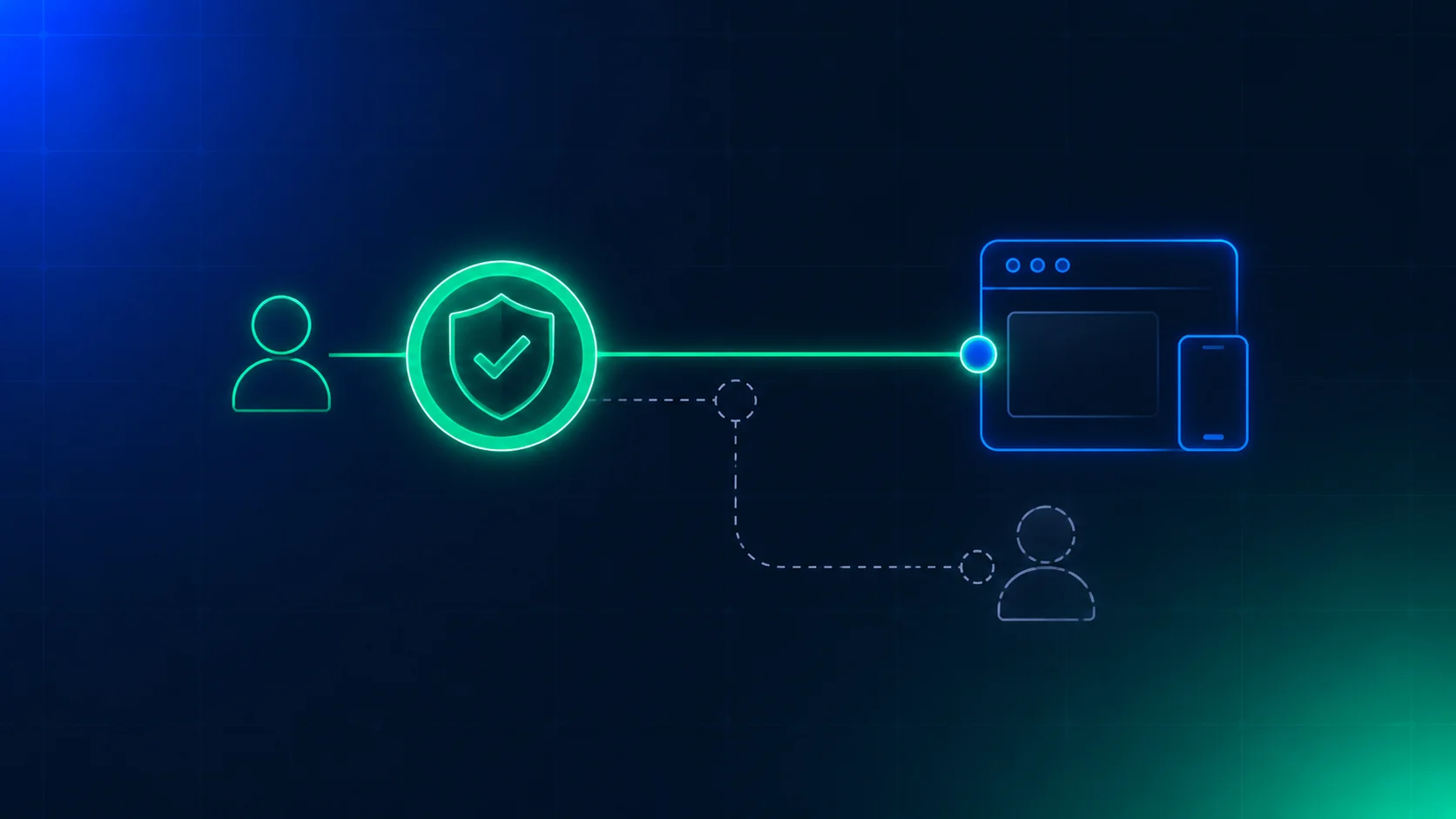
The fix is to stop storing a verdict and start storing a bound credential: a verified age property, cryptographically tied to a live subject and a specific account, that can be re-proven cheaply without re-running the full check. Concretely, that means designing around a few properties.
Bind the result to a live subject at verification time. The moment of verification is the one moment you have a confirmed live human in front of the sensor. Capture the binding then — link the age result to a biometric template or a subject key established under liveness — so the credential means “this verified person,” not “this passed session.”
Make the proof non-transferable and replay-resistant. A bound credential should be useless when copied. Tie it to a key the holder can’t trivially export, scope it to the account, and make each presentation a fresh cryptographic proof rather than a static flag. Detachment attacks fail when there’s nothing copyable to detach.
Re-bind, don’t re-verify, on return. On a returning session, you don’t need another document scan or a fresh estimation pass — you need to confirm the same bound subject is present. A lightweight liveness-plus-match re-bind answers “is this still the verified person?” at a fraction of the friction of a full check. That’s the move that lets you tighten assurance without feeding the proxy incentive: the cheaper the re-bind, the less reason anyone has to hand the phone to an adult.
Make sharing visible instead of impossible. You will never make a credential physically unshareable, but you can make sharing observable. Velocity signals, device and geographic anomalies, concurrent-session checks, and blacklist lookups turn a sold-on or handed-off account into a detectable pattern. Binding raises the cost of sharing; behavioral signals catch the sharing that still happens.
Log the binding, not just the pass. When an Ofcom or eSafety inquiry arrives, “we ran a check” is a weak answer. “Here is the verified age band, the method that produced it, the assurance level, and the binding to the account that has used it since” is a defensible one. ISO/IEC 27566 frames age assurance around documented assurance levels and accountability for issuance and revocation — and you can’t document an assurance level for a verdict you bound to a copyable flag.
What this means for your threshold logic
Binding also changes how you should read your own metrics. A vendor’s false-positive rate at the threshold tells you how often the check puts a minor on the wrong side of the line. It says nothing about how often the right result reaches the wrong user afterward. A system with a flawless model and no binding can still be trivially circumvented; a system with a merely good model and strong binding is far harder to beat in practice. When you evaluate age assurance, the accuracy benchmark and the binding architecture are two separate axes, and the second one rarely appears in a press release.
This is the same lesson the Persona/Discord incident taught from the data-architecture side and that VPN-circumvention laws are blunt-forcing from the policy side: the weakest point in age assurance is almost never the algorithm. It’s everything the algorithm’s output gets attached to.
How Xident handles binding
Xident is built around a verified result that belongs to a person, not a session. The first gate is client-side facial age estimation that returns a threshold classification — over or under 12, 15, 16, 18, 21, or 25 — under liveness, so the result is established against a confirmed live subject rather than a static image. Users who clear the configured buffer pass with no documents collected; the uncertain band escalates automatically to document OCR and face match, each of which strengthens the binding rather than just re-asking the question.
That verified result is issued as a reusable Xident token bound to the subject, not a copyable flag. On a returning session the system re-binds — a lightweight confirmation that the same verified person is present — instead of re-running the full check, which is what lets operators tighten assurance on high-risk surfaces without piling on the friction that drives proxy verification. Liveness (a randomised head-movement challenge in the browser, whose measured head-pose values the server checks against the challenge), together with blacklist checks and velocity signals on the Growth and Scale tiers, turns account-sharing and detachment attempts into observable patterns. And because every decision is logged as a classification with its method and assurance level — without storing a date of birth or ID image beyond the check — the trail you hand a regulator describes the binding, not just the pass.
The token also makes the economics work in your favor: because the verified property is bound and reusable, the accuracy and integrity questions only have to be answered once per person, and your effective assurance compounds as your verified population grows instead of decaying every session.
Facial age estimation, document checks, and OS-level signals have all gotten good enough to verify a person in 2026. The thing the industry still mostly ships without is the part that makes that verification stick — the binding between a true result and the live human who keeps using the account. Proxy parents, shared tablets, borrowed IDs, and detached tokens aren’t exotic attacks. They’re what happens by default when you store a verdict instead of binding a credential. The check was never the hard part. Keeping it attached to the right person is.