In May 2026, Meta announced it would use AI to scan photos and videos on Instagram and Facebook for “visual cues” like height and bone structure to estimate whether users are underage. OpenAI rolled out behavioral age prediction for ChatGPT in January, analyzing usage patterns, active hours, and account age to restrict content for suspected minors. YouTube has been doing something similar since late 2025, profiling watch history and search behavior to apply age restrictions.
The industry framing is consistent: AI-powered age assurance at scale, protecting children without requiring ID documents.
The reality is more complicated. What these platforms are deploying is not age verification. It is behavioral profiling repurposed as a child safety measure. The distinction matters — for accuracy, for privacy, for liability, and for the platforms and developers building products that regulators will actually hold accountable.
What Behavioral Age Profiling Actually Does
Traditional age verification establishes a fact: this user is over 18, confirmed by a government-issued document, a biometric check, or a cryptographic credential. The result is binary and auditable.
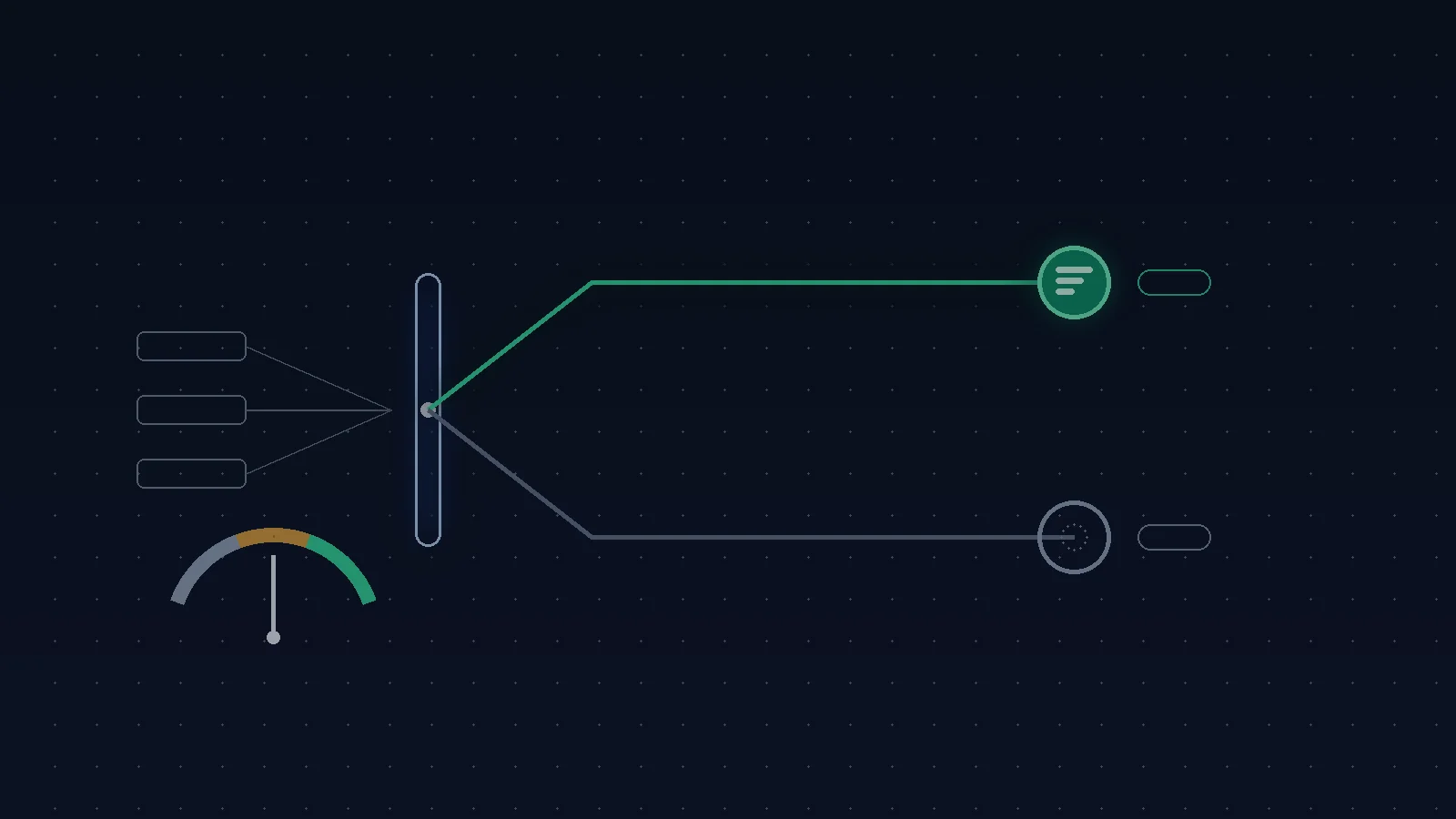
Behavioral age profiling does something fundamentally different. It observes patterns — what content a user engages with, when they are active, how they interact with a platform, what visual characteristics appear in their photos — and produces a probability score. Meta’s system combines text analysis, interaction patterns, and visual signals. OpenAI looks at four primary signals: account age, typical active times, usage patterns over time, and self-reported age. YouTube analyzes search queries, watch categories, and account tenure.
None of these signals actually verify age. They infer it. And inference at scale introduces error rates that compound across hundreds of millions of users.
The Accuracy Problem Nobody Talks About
Consider Meta’s user base of roughly 3 billion monthly active accounts. Even a system with a 95% accuracy rate — which would be remarkably high for behavioral profiling — produces 150 million incorrect classifications. Some of those are false negatives: minors who slip through because their behavior patterns resemble adults. Others are false positives: adults who are flagged as underage because they are night owls, use the platform in short bursts, or post content that pattern-matches to younger demographics.
When the algorithm gets it wrong, the burden shifts to the user. Meta’s stated process is clear: flagged accounts are deactivated, and users must provide government ID through a third-party verification service (currently Yoti) to contest the decision. OpenAI’s system restricts content access based on inferred age with no documented appeal mechanism beyond contacting support.
This creates a perverse dynamic. The platform avoids the cost and friction of upfront verification by pushing it onto the users the algorithm flags — disproportionately affecting the people the system is least confident about.
Bias Is a Feature, Not a Bug
Behavioral profiling inherits every bias present in the training data and signal selection. Active hours correlate with time zones, work schedules, and socioeconomic factors. Content engagement patterns differ across cultures, languages, and communities. Visual analysis of “height and bone structure” — Meta’s own phrasing — raises obvious questions about accuracy across different body types, ethnicities, and disabilities.
Early research and advocacy groups have flagged that marginalized communities face higher misclassification rates with AI-based age estimation. Users in non-Western countries, users with disabilities, and users who do not conform to the platform’s implicit behavioral norms are more likely to be incorrectly flagged. When the consequence of a false positive is account deactivation and a demand for government ID, these biases have real cost.
This is not a theoretical concern. Discord’s age verification partner, Persona, was breached in early 2026, exposing approximately 70,000 government ID photos. The backlash was severe enough that Discord delayed global rollout of their age verification system by months. Every time a behavioral profiling system incorrectly flags a user and demands ID submission, it pushes another person’s sensitive documents into a pipeline that has already demonstrated it cannot be fully secured.
The Surveillance Architecture
What Meta, OpenAI, and YouTube have built is a continuous monitoring system. To estimate age from behavior, the platform must observe and analyze behavior — all of it, all the time. This is architecturally different from a verification check that happens once and produces a credential.
Meta’s system explicitly analyzes photos, videos, captions, comments, and birthday-related content across a user’s entire profile history. OpenAI analyzes session timing, usage frequency, and interaction patterns across every conversation. YouTube processes full watch and search histories.
For platforms already under scrutiny for data collection practices, this is a significant expansion of surveillance scope justified by child safety. The data collected for age inference can be — and in some cases already is — repurposed for ad targeting, content recommendation, and behavioral prediction.
As of May 2026, 25 U.S. states plus the U.K., Australia, and Spain have age verification laws on the books. Regulators are not asking for behavioral inference. They are asking for verified age checks that produce auditable results. The gap between what regulators require and what platforms are deploying will create liability exposure as enforcement ramps up.
What Actual Verification Looks Like
The alternative to behavioral profiling is not the old model of uploading a photo of your driver’s license to a cloud server. That approach has its own well-documented problems — data breach risk, friction, and centralized storage of sensitive documents.
Privacy-first age verification in 2026 looks different. The technical building blocks exist and are maturing rapidly:
On-device processing. Age estimation and document verification happen on the user’s device. Biometric data never leaves the phone. The server receives only a cryptographic attestation — a yes-or-no answer to “is this user over the required age?” — without the underlying data.
NFC chip verification. Modern passports and national IDs contain NFC chips with cryptographically signed biometric data. Tapping a phone to an ID document provides a high-assurance identity check that is extremely difficult to forge. No images are uploaded; the chip’s digital signature is verified locally.
Reusable credentials. A user verifies once and receives a privacy-preserving credential — a token or zero-knowledge proof — that can be presented to any service without re-verifying. The credential proves age without revealing identity, birthdate, or any other personal information.
Selective disclosure. Mobile driver’s licenses (mDLs) and EU Digital Identity Wallets support sharing only the specific attribute needed. A platform asking “is this user over 18?” receives exactly that answer — not a name, not an address, not a photo.
These approaches share a common architecture: verify once with high assurance, then prove the result without exposing the underlying data. The verification is a discrete event, not a continuous surveillance process.
The Regulatory Gap
Regulators are moving toward prescriptive requirements. The UK’s Online Safety Act requires “highly effective” age assurance with quantifiable accuracy thresholds. France’s ARCOM standard mandates double anonymity — the platform cannot see the verification data, and the verification provider cannot see what platform the user is accessing. Germany’s KJM sets specific false positive and false negative rate ceilings.
Behavioral profiling meets none of these standards. It cannot provide quantifiable accuracy guarantees per user. It does not support anonymity — the profiling is inherently tied to a user’s platform identity. It does not produce a reusable credential. And it does not support interoperability — a behavioral profile on Instagram means nothing on a gaming platform or an e-commerce checkout.
Platforms deploying behavioral age estimation in jurisdictions with specific verification requirements are making a bet that regulators will accept inference as equivalent to verification. As enforcement actions accelerate through 2026, that bet is looking increasingly risky.
What This Means for Platform Builders
If you are building a platform that needs age verification — whether for compliance, marketplace trust, or parental consent — the behavioral profiling approach adopted by Meta, OpenAI, and YouTube is not a model to follow. It is a model built for platforms with billions of users and teams of lawyers, designed to minimize friction at the cost of accuracy and privacy.
For most platforms, the practical path forward is integrating a verification provider that offers:
High-assurance checks that meet the most stringent regulatory standards (UK Ofcom, France ARCOM, Germany KJM) so you are not scrambling to upgrade when enforcement reaches your market or vertical.
Privacy-first architecture where biometric data stays on the user’s device and your servers never store or process sensitive identity documents.
Low friction through reusable credentials, NFC tap-to-verify, and smart fallback flows that keep completion rates above 90% instead of forcing every user through document upload.
Auditable results that produce a verifiable record of the age check without exposing the underlying identity data — satisfying regulators without creating a breach target.
The platforms building behavioral profiling systems are doing so because they have no other way to retroactively verify the age of billions of existing users without unacceptable friction. That is a problem specific to incumbents who allowed unrestricted signups for decades. It is not a model for new platforms, regulated industries, or any product where “we think the AI got it right” is not an acceptable answer.
The Bottom Line
AI behavioral age profiling is a surveillance system marketed as a safety feature. It trades accuracy for scale, creates systematic bias against vulnerable populations, demands ID documents from the people it misclassifies, and produces no interoperable or auditable proof of age.
The platforms deploying it are not setting a standard. They are choosing the only option available to them given their architecture and user base. That is not your constraint.
For platforms building age verification into their product from day one, there are better options — faster, more private, more accurate, and more defensible when regulators come asking how you know your users are old enough.