For most of its short history, age assurance has answered a single binary question: is this user old enough to be here, yes or no? Pass the gate and you get the full product; fail it and you get a wall. That model is now visibly breaking down, and the clearest signal came in January 2026, when Roblox made every user on Earth complete an age check before they could use chat.
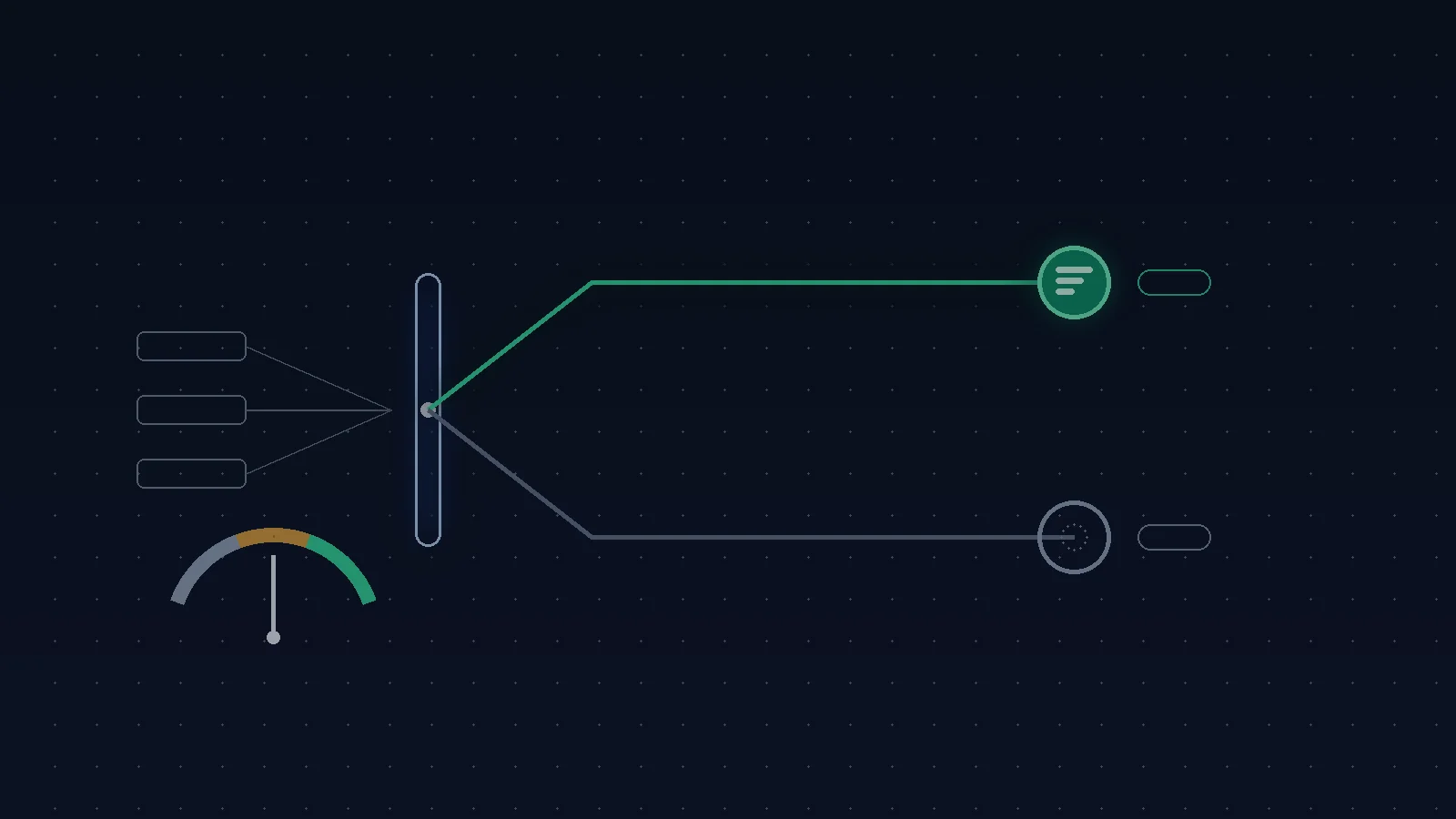
The interesting part isn’t that Roblox added age verification. It’s what the verification does. Roblox doesn’t use the result to grant or deny access to the platform — chat is available to almost everyone. It uses the estimated age to sort each user into one of six age bands, from “under 9” to “21 and over,” and then governs who is allowed to talk to whom. A user can communicate with people in their own band and below, but not above. A 13-to-15-year-old can chat with anyone 15 or younger and is structurally prevented from exchanging messages with users in the 16-plus bands.
This is a different primitive than the age gate, and it is the direction the entire child-safety regime is heading. The question is no longer “should this person be allowed in?” It’s “given everyone who is already in, who should be able to reach whom?” Age assurance stops being a turnstile and becomes the input to a contact graph.
Why the Gate Was Never Enough
The age gate was designed for a content problem: keep minors away from material that is unlawful or unsafe for them — pornography, gambling, alcohol sales. For that problem, a binary check at the door is the right shape. The harm lives in the content, the content sits behind the gate, and once you’ve established the user is over the threshold the job is largely done.
But the dominant child-safety harm on social and user-generated-content platforms isn’t content the platform publishes. It’s contact between users. Grooming, coercion, and exploitation happen in the space between accounts — in DMs, game chat, voice channels, and comment threads. A binary age gate does nothing about this. It can confirm that a platform’s users include both adults and minors, then wave them into the same undifferentiated communication pool. The gate verifies age and immediately discards the one thing that would let you act on it.
Regulators have noticed. The EU’s guidelines on the protection of minors under the Digital Services Act, published in mid-2025, explicitly name grooming, harmful contact, and addictive design as risks platforms must mitigate proportionately — not just harmful content. The US Kids Online Safety Act pushes platforms away from self-attested age gating toward age assurance precisely so that they can apply minor-specific protections, including restricted default settings for users up to age 17 and duty-of-care obligations that only make sense if you know which of your users are children. The UK’s Online Safety Act frames “highly effective age assurance” as a tool for managing contact and exposure risk, not merely access.
The throughline across all three regimes is the same: knowing a user’s age is no longer the end of the compliance task. It’s the beginning. The age signal has to flow into how the product behaves for that user — what they see, what defaults apply, and crucially, who they can interact with.
The Architecture of Age-Based Experiences
“Age-based experiences” is the umbrella term for products that vary their behavior by a user’s assured age rather than gating access on it. Communication tiering — restricting contact across age bands — is the most consequential instance, but the same machinery drives age-appropriate defaults, content filtering, and feature availability. Building it well requires three things the old gate never needed.
First, age bands instead of a threshold. A gate only needs one boundary: over 18 or under 18. Age-based experiences need a graded scale, because the protective logic is relational. To decide whether two users can talk, you need both of their approximate ages, not a single pass/fail bit. Roblox’s six-band scheme is one cut; a dating app preventing adults from messaging 16-to-17-year-olds needs a different cut; a gaming platform separating young children from teens needs another. The common requirement is that the age signal must be expressed as a band or estimate the product can reason about, not collapsed to a boolean at the door.
Second, age estimation as the default method. You cannot demand a government ID from every user on a platform with tens of millions of accounts, most of whom are doing nothing more sensitive than chatting. The friction would be ruinous and, in several jurisdictions, legally problematic. Facial age estimation is what makes population-scale banding viable: it returns an age range from an image without establishing identity, and the image can be processed and discarded immediately. Roblox routes its estimation through a vendor that deletes the media right after processing — the platform learns a band, not a face. This is the only economically and legally sane way to assign bands to an entire user base.
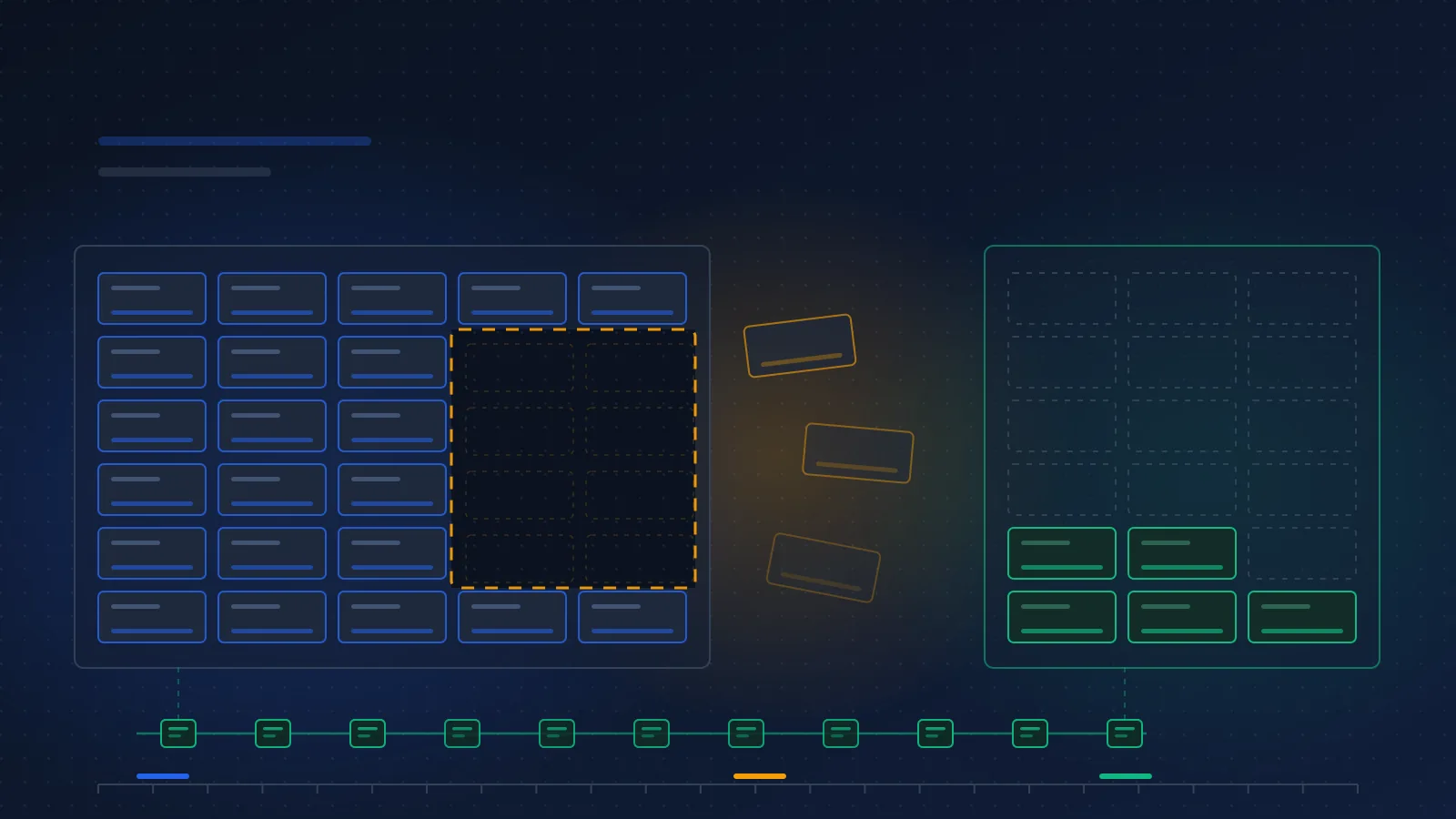
Third, persistence and re-evaluation. A band assigned once has to survive logout, device changes, and the simple passage of time — a 12-year-old becomes a 13-year-old. And it has to resist the obvious attack: a user who gets sorted into a low band trying to re-estimate their way into a higher one to reach younger users. Age-based experiences therefore need a durable, privacy-preserving age signal bound to the account, plus a policy for when re-verification is required, rather than a result that’s recomputed from scratch and trivially gamed on every session.
The Accuracy Problem Gets Sharper, Not Softer
Tiering raises the stakes on estimation accuracy in a way pure gating does not, and operators should be clear-eyed about it. With a single 18 threshold, you tune one buffer and accept a known error profile around one boundary. With six bands, you have five internal boundaries, and an error at any of them can place an adult in a teen band or a teen in an adult band — the two failure modes the whole system exists to prevent.
The good news is that the measurement infrastructure has matured. NIST’s Face Analysis Technology Evaluation now runs a dedicated age-estimation track that benchmarks algorithms on mean absolute error, performance specifically around the 13–16 range, “Challenge 25”-style buffer scenarios, and consistency across demographic groups. The UK’s Age Check Certification Scheme provides independent conformity assessment against PAS 1296. The strongest models reach roughly one to two years mean absolute error for young adults under independent testing — but, predictably, accuracy degrades near boundaries and varies across demographics, which is exactly why buffer policies exist.
The practical implication for banding is that boundaries must be treated as fuzzy zones, not crisp lines. Around each band edge you apply a margin: a user whose estimate lands near a boundary is treated conservatively — placed in the more protective band, or escalated to a higher-assurance check — rather than confidently sorted. Someone estimated at 25 clears into an adult band comfortably; someone estimated at 16 near the 16/17 line should not be granted adult-tier contact on the strength of estimation alone. The cost of this conservatism is that more borderline users get escalated; the cost of skipping it is that the system fails at precisely the cases it was built for. Demographic fairness has to be measured here too, because a band system with disparate error rates doesn’t just misclassify — it systematically over-restricts or under-protects specific groups.
Escalation, Not Interrogation
None of this means every uncertain user should be marched through an ID upload. The defensible pattern is the same waterfall that has become the consensus shape of modern age assurance, applied to banding:
Estimation handles the overwhelming majority of users and assigns a provisional band. Users who land comfortably inside a band are done. Users near a boundary, or whose assigned band materially restricts them and who contest it, escalate to a higher-assurance method — a verifiable digital credential, an NFC-read identity document, or a government ID check offered as one option among several. Because escalation only fires for the small slice of users sitting on a contested edge, the privacy and friction cost stays contained rather than imposed on everyone.
This is also what keeps the system humane and lawful. A user who declines to upload an ID isn’t ejected; they’re assigned the conservative band their estimation supports, with a path to prove a higher age if they choose. That preserves access for adults who won’t surrender identity documents while keeping the protective contact rules intact — the same “always offer a no-ID alternative” principle that regulators in Australia and elsewhere now treat as mandatory.
What Operators Should Build Now
If you run any platform where users can contact each other — social, gaming, dating, marketplaces, creator tools, community apps — age-based experiences are no longer a Roblox novelty. They’re the architecture regulators are converging on. The priorities:
Stop discarding the age signal at the gate. If your verification flow returns a boolean and throws away the granularity, you’ve thrown away the input to every age-appropriate feature you’ll be required to build. Capture and persist a band or estimate, not just a pass/fail.
Model your contact graph against age bands. Decide explicitly which bands may initiate contact with which others, where defaults sit, and what an adult-to-minor messaging attempt should trigger. This is a product and policy decision, not a vendor checkbox — the verification layer only supplies the age; you own the relational rules.
Lead with estimation, escalate at the edges. Make facial age estimation the default for population-scale banding, with immediate deletion of the underlying media, and reserve document or credential checks for boundary cases and contested results. Budget for the boundary buffer: it will escalate more users, and that’s the correct trade.
Persist age status and define re-verification. Bind the band to a durable, privacy-preserving credential so it survives sessions and resists re-estimation gaming, and write down when re-verification is required — at band boundaries crossed by age, on suspicious re-attempts, after a set interval.
Measure error in both directions, across groups. Track how often the system places minors in adult bands and adults in minor bands, broken down by demographic. Both are failures. Regulators reviewing a contact-safety system will ask for exactly this evidence.
How Xident Fits Age-Based Experiences
Xident was built to produce the primitive age-based experiences require: a graded age signal, not a boolean. Its age threshold classification operates across multiple bands — +12, +15, +18, +21, +25 — which is precisely the shape a communication-tiering system needs to decide who can reach whom. Where a traditional gate would collapse all of that into “adult / not adult,” Xident hands the platform the band so the product can apply relational rules on top of it.
The estimation runs client-side and returns a classification rather than an identity, so a platform can assign bands at population scale without collecting or storing faces — the model learns an age range and the image is gone. For the small set of users sitting on a contested band boundary, Xident escalates to document verification as an option alongside non-ID paths, keeping high-assurance checks where they matter and friction low everywhere else. And because returning users are recognized through a reusable, privacy-preserving token, the assigned band persists across sessions and devices instead of being recomputed — which is what makes re-estimation gaming detectable and re-verification policy enforceable.
The net result is the missing layer between “we verified the user’s age” and “the product behaves safely for that user.” Xident supplies the durable, minimal, banded age signal; the platform decides what experience each band gets. That separation is exactly what the next phase of child-safety regulation rewards: knowing age precisely enough to act on it, while knowing nothing more about the person than you need to.
Roblox didn’t just add an age check. It demonstrated what age assurance is for once you stop thinking of it as a door. The age signal isn’t there to admit or reject a user — it’s there to shape what happens after they’re in: who they can talk to, what defaults apply, which experiences they get. Communication tiering is the first large-scale proof of the pattern, but the regulatory pressure behind it — KOSA’s duty of care, the DSA’s minor-protection guidelines, the UK’s contact-risk framing — applies to every platform where users meet each other. The gate answered a question that was always too small. The contact graph is the real one, and the platforms that build for it now will be the ones still standing when “age-appropriate by default” stops being a feature and becomes the baseline.